Work
10 Reasons to Work in UAE
Ten reasons the UAE attracts job seekers, from tax-free salaries and strong safety to a multicultural workforce, good healthcare and…


Tools & guides
Free calculators and practical guides for living in and visiting the UAE.
See all 20 free toolsPractical guides
Popular searches
↑ ↓ to move · Enter to open · / to search from anywhere
Free tool · Time and culture
Prayer times in the UAE change every day with the sun. This tool calculates Fajr, Dhuhr, Asr, Maghrib and Isha for each emirate in UAE time (GMT+4). The official Awqaf timetable is the reference, and calculated times may differ from it by a minute or two.
Loading the tool…
Runs in your browser. Nothing you type is sent to us or stored.
The five daily prayers follow the position of the sun, so their times shift a little every day and differ slightly between emirates. This tool works them out in your browser from your city's location and the date you pick:
Small safety margins are then applied, as is usual for UAE timetables: 3 minutes are taken off sunrise, and 3 minutes are added to Dhuhr, Asr and Maghrib. All times are in UAE time (GMT+4). The UAE does not use daylight saving, so the clocks never change.
The official reference is the timetable of the General Authority of Islamic Affairs, Endowments and Zakat (Awqaf), published on its prayer times page. Mosques across the country call the adhan by that timetable.
Our times use the 18.2 degree method widely used for UAE timetables, but Awqaf does not publish every detail of its own calculation. A time shown here can therefore differ from the official one by a minute or two. When it really matters, such as the end of suhoor or Maghrib in Ramadan, follow Awqaf and your local mosque.
Pick your city, then a date. Choose This day to see the six times for that date, or Whole month for a full table you can scroll through. When you look at today, the tool also counts down to the next prayer, and the Official timetable link takes you straight to the Awqaf page.
Take Dubai on 24 October 2026. The sun reaches its highest point at about 12:03, so with the 3 minute margin Dhuhr shows at about 12:06. Sunset is around 17:44, so Maghrib shows at about 17:47. Sunrise is close to 6:22 and appears as about 6:19 after the margin. The sun is 18.2 degrees below the horizon at roughly 5:04 in the morning (Fajr) and 19:02 in the evening (Isha).
These rounded figures only show how the method works. For that day, use the tool's own result or, better still, the Awqaf timetable.
The sun rises earlier the further east you are. Fujairah, on the east coast, sees sunrise and sunset several minutes before Abu Dhabi, which lies further west. Al Ain and Ras Al Khaimah differ again because of their own latitude and longitude. That is why the tool asks for a city: choose the one closest to you.
| Rule | Detail |
|---|---|
| Fajr and Isha | Sun 18.2 degrees below the horizon |
| Asr | Standard method: shadow equal to the object's height |
| Safety margins | Sunrise minus 3 minutes; Dhuhr, Asr and Maghrib plus 3 minutes |
| Time zone | GMT+4 all year, no daylight saving |
| Official reference | Awqaf timetable |
Choose Dubai and today's date in the tool to see today's Fajr time, calculated with the sun at 18.2 degrees below the horizon. The official time is on the Awqaf timetable, which can differ by a minute or two.
No. They are calculated with the method widely used for UAE timetables. The official reference is the Awqaf timetable, and calculated times can differ from it by a minute or two.
Friday prayer is held at a unified time across the UAE, set by Awqaf. Check the Awqaf website or app, or ask your local mosque, for the current time.
No. The UAE stays on GMT+4 all year with no daylight saving, so prayer times only move with the sun.
Some apps use the Hanafi method, where Asr starts when an object's shadow is twice its height, which makes Asr noticeably later. This tool uses the standard method, where the shadow equals the object's height.
Rules last checked: Oct 1, 2026. Results are estimates to help you plan, not legal, tax or financial advice.
Ten reasons the UAE attracts job seekers, from tax-free salaries and strong safety to a multicultural workforce, good healthcare and…
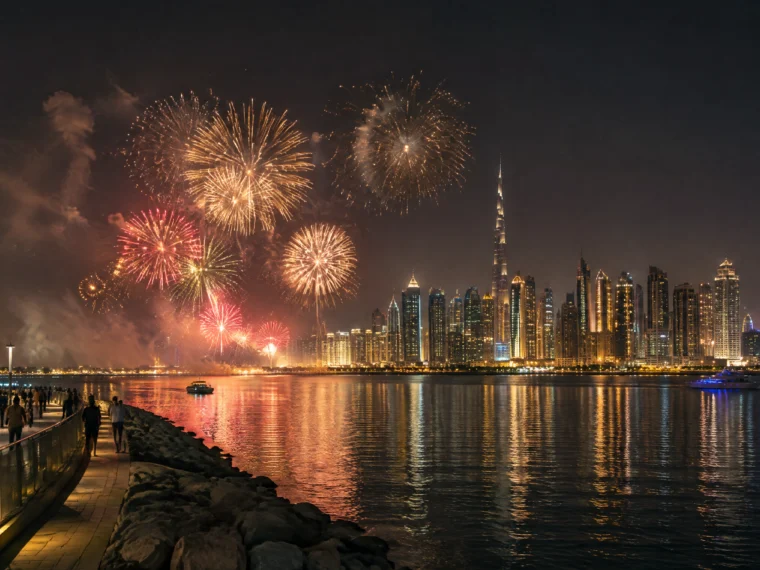
Seven public holidays observed in the UAE, why moon sighting moves the Islamic dates each year, and why knowing them…
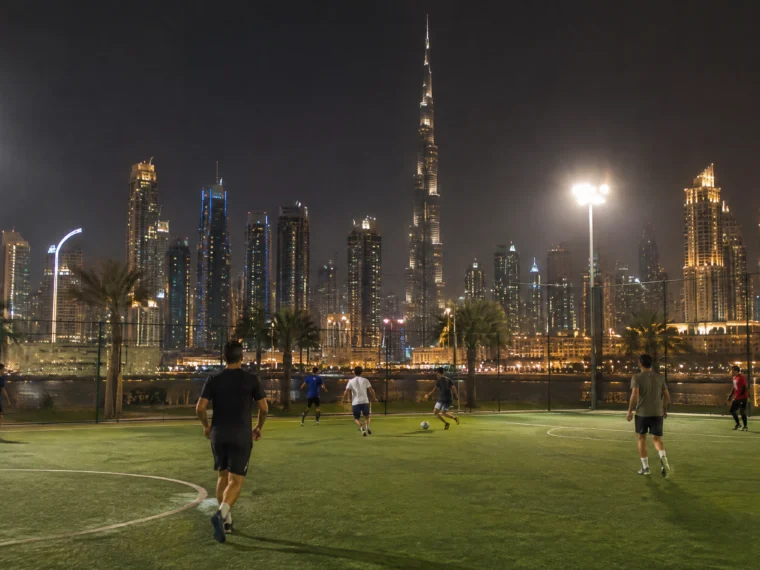
A guide to 15 football venues in Dubai, from FC Jumeirah to United Pro Sports, with pitch types, booking prices,…