

UAE Etiquette and Dress Code: What Visitors Should Know (2026)
Dress modestly in public, keep swimwear for the beach and ask before taking photos of people. Here are the UAE etiquette rules and laws visitors should know.
Highlights
- Cover shoulders and knees in malls and public places; swimwear is only for beaches, pools and water parks.
- Photographing people without consent can bring a fine of AED 150,000 to AED 500,000 and/or jail.
- Alcohol is only for over-21s in licensed venues or at home, and is banned in Sharjah.
- The UAE has zero tolerance for drugs; controlled medicines need a prescription and a MOHAP permit.
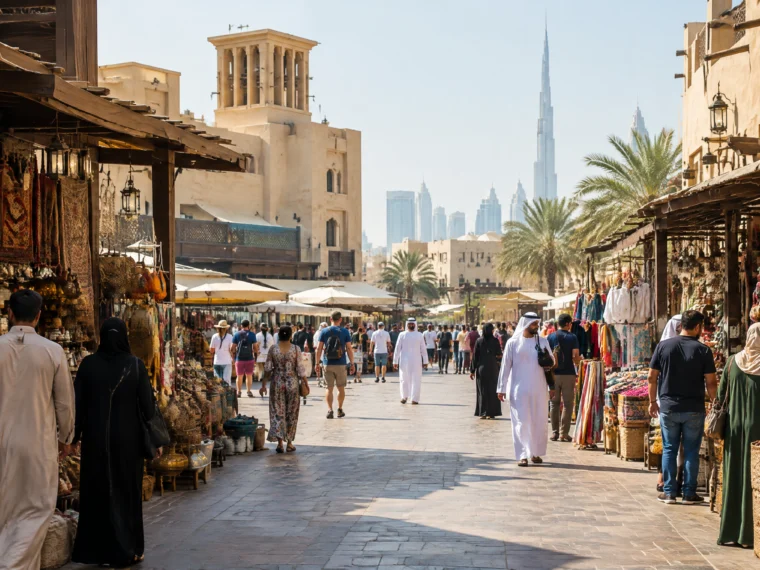
In the UAE, visitors are expected to dress modestly in public places such as malls, souks and government buildings, keep swimwear for beaches and pools, and be respectful in mosques and around people who are praying. Most rules are common sense, but a few are strict laws that surprise visitors: drinking alcohol in public, photographing people without permission, swearing or rude gestures (including online) and any contact with illegal drugs can all lead to fines, jail or deportation.
Is there a dress code in the UAE?
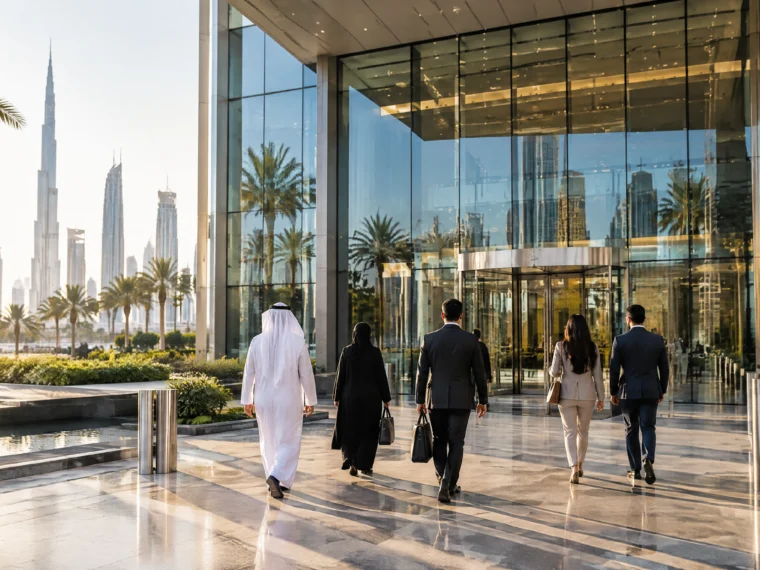
There is no single national dress law for visitors, but modest dress is expected in public. The official UAE government portal asks visitors to avoid clothing that is see-through, reveals too much of the body or shows offensive images or slogans. It recommends loose, long clothing that covers the shoulders, arms and legs for both men and women. Women are not required to cover their hair or wear traditional dress in everyday public places.
The UK government travel advice gives a simple benchmark: women should cover shoulders and knees, and underwear should not be visible. Hotels, restaurants and events may also set their own dress codes, so check before you go.
What should you wear in malls?
Malls are family places and the most common spot where visitors get a polite reminder. A safe outfit is a T-shirt or blouse with sleeves, plus trousers, a midi skirt or shorts that reach the knee. Men should avoid going shirtless or wearing very short shorts or sleeveless vests. Some malls display signs at the entrance asking shoppers to respect the dress code. It also helps to carry a light layer anyway, because air conditioning indoors is strong. For packing ideas, see our guide on how to pack for a trip to the UAE or try our packing list generator.
What can you wear at the beach?
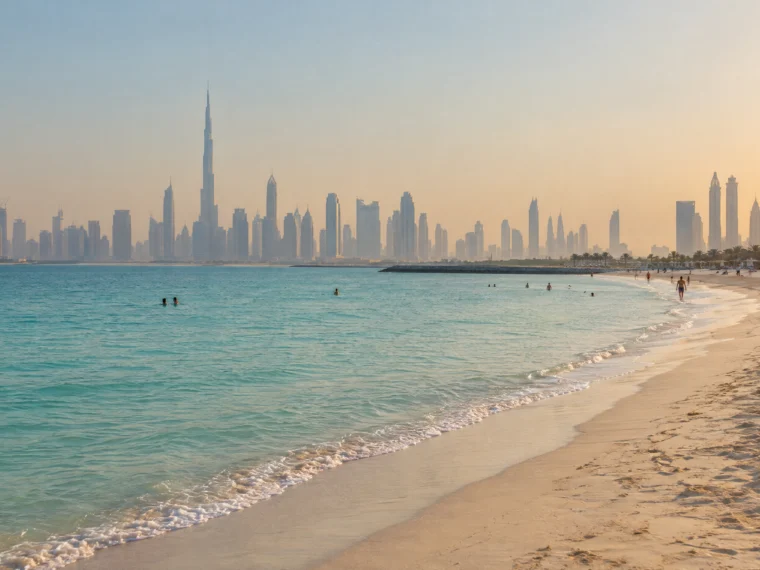
Normal swimwear, including bikinis, is fine at beaches, water parks and swimming pools. The official portal is clear that swimwear should not be worn anywhere else, so cover up before walking to a café, a beach-front promenade shop or the hotel lobby. Nudity, including topless sunbathing, is prohibited. Our guide to the best beaches in the UAE covers where to go.
What are the dress rules at the Sheikh Zayed Grand Mosque?
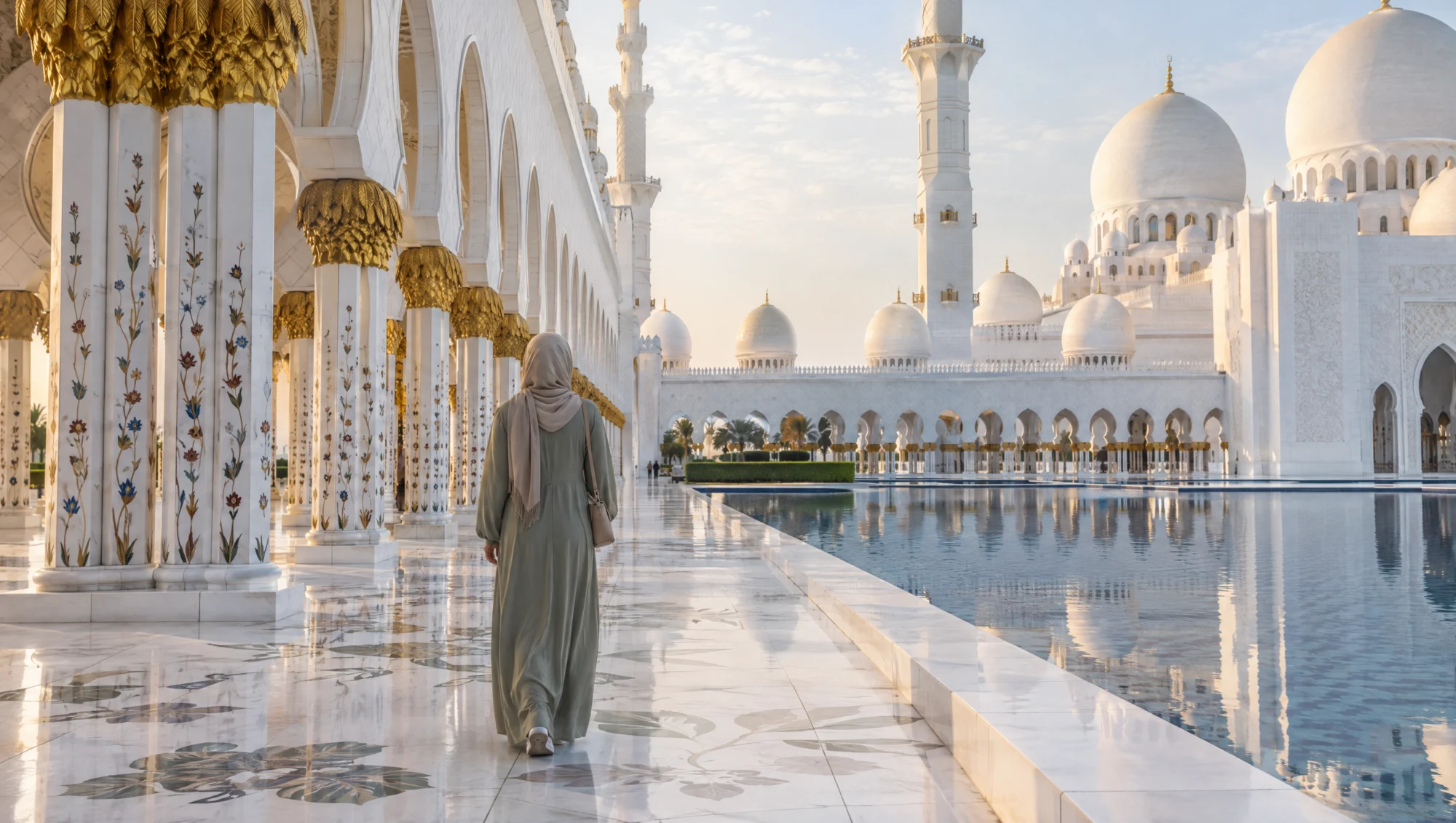
The Sheikh Zayed Grand Mosque Centre in Abu Dhabi publishes its own rules, and staff check them at the entrance:
| Who | What to wear | What to avoid |
|---|---|---|
| Women | Loose clothing down to the ankles, sleeves to the wrists, hair fully covered | Tight, transparent or revealing clothing |
| Men | Most clothing is allowed; full-length trousers are preferred | Tight, transparent or sleeveless tops |
| Everyone | Calm, simple outfits | Slogans or inappropriate prints, heavy make-up, excessive jewellery, very bright colours |
Other mosque rules include no public displays of affection, phones on silent, no food or drinks, and photos only at designated photo spots. Commercial or professional photography needs a permit. Come dressed correctly rather than counting on borrowing an abaya at the door.
In September 2026, the mosque introduced visitor entry fees, listed on its website: AED 10 for tourists and AED 5 for Emirates ID holders, according to Gulf News. Worshippers enter free, as do visitors over 60, children under three and people of determination. Tickets are booked online in advance. Reported visiting hours are 9am to 8:30pm from Saturday to Thursday, and on Fridays 9am to 11:30am and 2:30pm to 8:30pm. Always confirm on the official site before you go. Our post on reasons to visit Sheikh Zayed Mosque has more on what to see.
How should you behave in public in the UAE?
The UAE is a Muslim country with a very international population, and daily life is relaxed and friendly. The key is to keep things low-key in public:
- Public affection: holding hands is generally fine for couples, but kissing and more intimate behaviour in public are frowned upon. UK travel advice notes that people can be arrested for kissing in public.
- Swearing and rude gestures: these are illegal, including towards other drivers and online. Offenders can be fined, jailed or deported. Be especially polite with police and officials.
- Noise and drunkenness: loud, rowdy behaviour in public is not acceptable, and being drunk in public is an offence.
- Queues and personal space: wait your turn, and note that some places have women-only queues, sections or Metro carriages.
- Charity: fundraising is regulated, and begging is illegal.
Our article on dos and don’ts in Dubai has more everyday examples.
Can you take photos of people in the UAE?
Not without their permission. Photographing strangers, especially women and families, is one of the most common ways visitors get into real trouble. Under Article 44 of Federal Decree-Law No. 34 of 2021 on combating rumours and cybercrimes, taking photos of other people in public or private places without consent is an invasion of privacy. The penalty can be at least six months in prison and/or a fine of AED 150,000 to AED 500,000, as explained by Gulf News. Photographing or sharing images of accident victims is also covered.
In practice:
- Ask before you photograph anyone, and accept a no.
- Do not film strangers for social media, even in the background, without consent.
- Avoid photographing government buildings, military sites, police and airports.
- Check whether drones need a permit before flying one.
- Landmarks, skylines and your own group are fine.
What are the alcohol rules in the UAE?
Alcohol is legal in most of the UAE for non-Muslims aged 21 and over, but only in private homes and licensed venues such as hotel bars and restaurants. Drinking or being drunk in a public place is illegal everywhere in the country, and drink driving is treated very seriously. Rules differ by emirate:
| Emirate | Key rules |
|---|---|
| Dubai | No licence needed to drink in licensed venues. A personal licence is needed to buy alcohol for home; it is free to apply for, and tourists can get a temporary licence. |
| Abu Dhabi | No licence needed to buy alcohol since 2020. Minimum age 21, personal use only. |
| Sharjah | Alcohol is banned. Drinking or possessing it is illegal. |
| Ras Al Khaimah, Ajman, Umm Al Quwain, Fujairah | No licence needed to buy or drink. Minimum age 21, and you may be asked for ID. |
Sources: UK FCDO and Gulf News. Remember that driving through Sharjah with alcohol in your car is still possession there. If you are bringing bottles from duty free, check the current limits with our customs allowance checker.
How do people greet each other in the UAE?
The standard greeting is “As-salamu alaykum” (peace be upon you), answered with “Wa alaykum as-salam”. A simple “hello” in English is perfectly fine too, since English is widely spoken. Our Arabic phrasebook has more phrases with pronunciation.
- Handshakes are common between men. Between men and women, it is polite to wait and see if the other person offers a hand first. Some people will place a hand on their heart instead, which is a warm greeting, not a snub.
- Use your right hand to give, receive, eat and shake hands.
- If you are offered Arabic coffee (gahwa) and dates, accept at least one cup. Gently shaking the cup from side to side signals you have had enough.
- Do not ask personal questions about someone’s wife or female relatives.
- Remove your shoes when entering someone’s home if others do.
What should you know about Friday prayers?
Friday is the main day of congregational prayer for Muslims. Since 2 January 2026, the Friday sermon and prayer in all UAE mosques start at 12:45pm, as announced by the General Authority of Islamic Affairs, Endowments and Zakat and reported by Gulf News. The official weekend is Saturday and Sunday, and many offices and schools finish early on Fridays.
Around midday on Fridays, expect traffic and busy parking near mosques, and some small shops may close briefly. Tourist access to the Sheikh Zayed Grand Mosque is paused at midday on Fridays. Do not walk in front of people who are praying, and keep noise down near mosques. Exact daily prayer times are on our UAE prayer times page.
Which gestures should you avoid?
- Pointing at people with one finger or beckoning with a finger can come across as rude.
- Showing the soles of your feet or pointing them at someone, for example by resting your feet on a table, is considered disrespectful.
- Offensive hand gestures, including the middle finger, are illegal and are taken seriously, especially in traffic.
- Passing food or money with your left hand is best avoided.
What are the social media and privacy laws?
At a high level, the UAE’s cybercrime law applies to everything you post, share or send, including private messages. In short:
- Do not post photos or videos of people without their consent.
- Do not insult or defame individuals, companies, religions or the state online. Swearing in messages and posts can also be an offence.
- Do not spread rumours or unverified news, especially about public safety.
- Do not run fundraisers or charity appeals online without the proper approvals.
- Commercial media work may need a permit from the authorities.
Penalties can be heavy, and your phone is likely to be the evidence. If in doubt, do not post it.
What are the rules on drugs and medicines?
The UAE has zero tolerance for drugs. The UK FCDO warns that authorities count drugs in your bloodstream as possession, so you can be prosecuted for something you used before you arrived. Possessing even a tiny amount, including cannabis, can lead to at least three months in prison or a fine of AED 20,000 to AED 100,000, and trafficking carries far heavier sentences. Some CBD products, herbal highs, skincare items and e-cigarette refills contain banned ingredients. Bags of transit passengers are screened too.
Prescription medicines need care. The UAE Ministry of Health and Prevention (MOHAP) offers a free online permit for bringing controlled medicines (narcotic and psychotropic drugs) for personal use:
- Check with your doctor whether any of your medicines are controlled in the UAE.
- Carry a prescription issued within the last three months, stamped by your clinic, showing your name, the medicine, the dose and the treatment period.
- Bring a medical report issued within the last year if you have one.
- Bring no more than three months’ supply of controlled medicines.
- Apply for the MOHAP permit before you travel, or declare controlled medicines on arrival with your prescription and report.
- Keep medicines in their original packaging.
The UAE Embassy in the US confirms that ordinary prescription medicines and over-the-counter medicines do not need prior approval, but you should always carry the prescription for the quantity you bring.
Quick etiquette checklist for UAE visitors
- Cover shoulders and knees in malls, souks and public buildings.
- Keep swimwear for the beach, the pool and water parks.
- Dress fully covered for mosques, with women covering their hair.
- Ask before photographing anyone.
- Drink alcohol only in licensed venues or at home, never in public or in Sharjah.
- Avoid swearing and rude gestures, in person and online.
- Check your medicines before you fly and never carry drugs or CBD products.
Most residents will tell you the same thing: people here are friendly and forgiving with visitors who try. For more context on daily life, read what to expect in the UAE.
Last checked: October 2026. Rules and fees in the UAE change; confirm on the official pages above before you rely on them.
Frequently asked questions
What should tourists wear in the UAE?
Wear modest clothing in public places such as malls, covering shoulders and knees, and avoid see-through or offensive clothing. Swimwear is fine at beaches, pools and water parks only.
Can I take photos of people in Dubai or Abu Dhabi?
Only with their permission. Photographing people without consent is an offence under the UAE cybercrime law, with penalties of at least six months in prison and/or a fine of AED 150,000 to AED 500,000.
Can you drink alcohol in the UAE?
Yes, if you are 21 or over and drink in licensed venues or at home, except in Sharjah, where alcohol is banned. Drinking or being drunk in public is illegal everywhere.
Do I need permission to bring medicines into the UAE?
Controlled medicines such as narcotic and psychotropic drugs need a free MOHAP permit or must be declared on arrival with a prescription, up to three months' supply. Ordinary prescription and over-the-counter medicines do not need prior approval, but carry the prescription.
Sources
- UAE Government portal: Dress code
- Sheikh Zayed Grand Mosque Centre: Mosque manners
- Gulf News: Sheikh Zayed Grand Mosque entry fee
- UK FCDO travel advice: United Arab Emirates
- Gulf News: Penalties for taking photos without permission
- Gulf News: Alcohol rules by emirate
- Gulf News: Friday prayer time from 2026
- MOHAP: Permit to import medicines for personal use
- UAE Embassy in Washington: Bringing medication into the UAE
Spotted something out of date? Tell us and we will fix it.