
Ramadan in the UAE: A Guide for Visitors and Residents (2027 Dates)
Ramadan 2027 in the UAE is expected to begin around 8 February, subject to moon sighting. Here is what changes for visitors and residents, from iftar to Eid.
Highlights
- Ramadan 2027 is expected to start around Monday 8 February, an estimate that depends on moon sighting.
- Eid al-Fitr 2027 is expected on 9 or 10 March, with an official holiday from 1 to 3 Shawwal.
- Restaurants and malls stay open, but eat, drink and smoke discreetly during fasting hours.
- Private sector working hours are cut by two hours a day for all employees, with no pay cut.
Ramadan 2027 in the UAE is expected to begin on or around Monday 8 February 2027, with Eid al-Fitr on about 9 or 10 March 2027. These are astronomical estimates: the official start is confirmed only after the UAE moon-sighting committee announces it. Visitors and non-Muslim residents are not expected to fast, restaurants and malls stay open, and the main thing asked of you is simple courtesy towards people who are fasting.
What is Ramadan?
Ramadan is the ninth month of the Islamic (Hijri) calendar and the holiest month of the year for Muslims. It marks the month in which the Quran was first revealed to the Prophet Muhammad. According to the official UAE government portal, Muslims who are able to fast abstain from food, drink and smoking from dawn until sunset. Fasting is one of the five pillars of Islam.
It is not only about food. Ramadan is a month of prayer, charity, family and reflection. People are encouraged to avoid arguments, bad language and unkind behaviour. People who are ill, pregnant women, young children and travellers are not obliged to fast in the same way, and many make up missed days later.
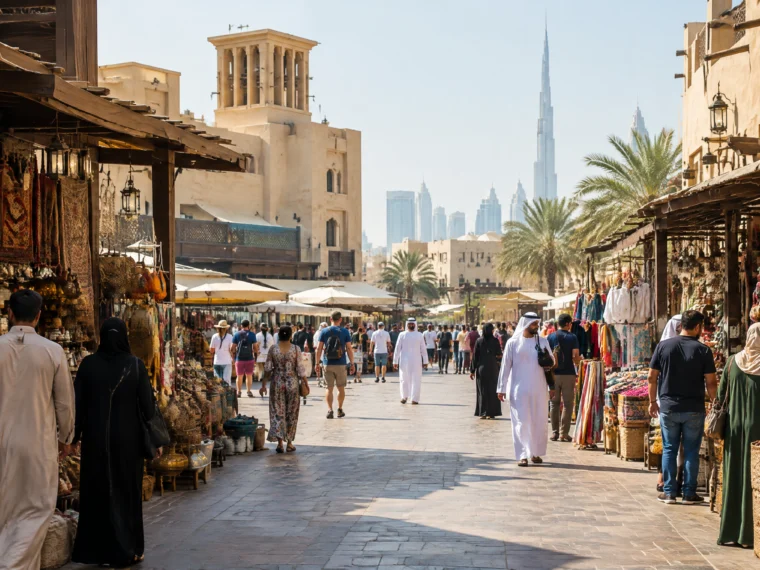
For many people who live here, Ramadan is the calmest and most generous time of the year. Days are quiet, evenings are busy, and you will see a lot of kindness, from free iftar meals at mosques to neighbours sharing plates of food.
When is Ramadan 2027 in the UAE?
The Islamic calendar follows the moon, so Ramadan moves about 11 days earlier each year in the Gregorian calendar. In 2026, Ramadan began around 18 February and Eid al-Fitr came in the third week of March. For 2027, astronomers point to an earlier start.
| Event | Expected date (estimate) | What decides it |
|---|---|---|
| First day of Ramadan 1448 | Monday 8 February 2027 | Crescent sighting announced by the UAE moon-sighting committee |
| Last days of Ramadan | Around 7 to 9 March 2027 | Ramadan lasts 29 or 30 days |
| Eid al-Fitr (1 Shawwal) | Tuesday 9 or Wednesday 10 March 2027 | Sighting of the Shawwal crescent |
These dates come from forecasts shared by the Emirates Astronomical Society and the UAE’s Astronomy Centre, as reported by The National. Treat them as a planning guide only. If you are booking flights around the start or end of Ramadan, leave a day of flexibility on each side. You can check how Hijri dates line up with the Gregorian calendar using our Hijri date converter.
Because Ramadan 2027 falls in February and early March, the weather is mild and fasting days are shorter than in summer. In Dubai, the gap between dawn and sunset in February is roughly 12 to 13 hours. For exact daily times, use our UAE prayer times page, since the fast starts at Fajr and ends at Maghrib.
What are iftar and suhoor?
Iftar: breaking the fast at sunset
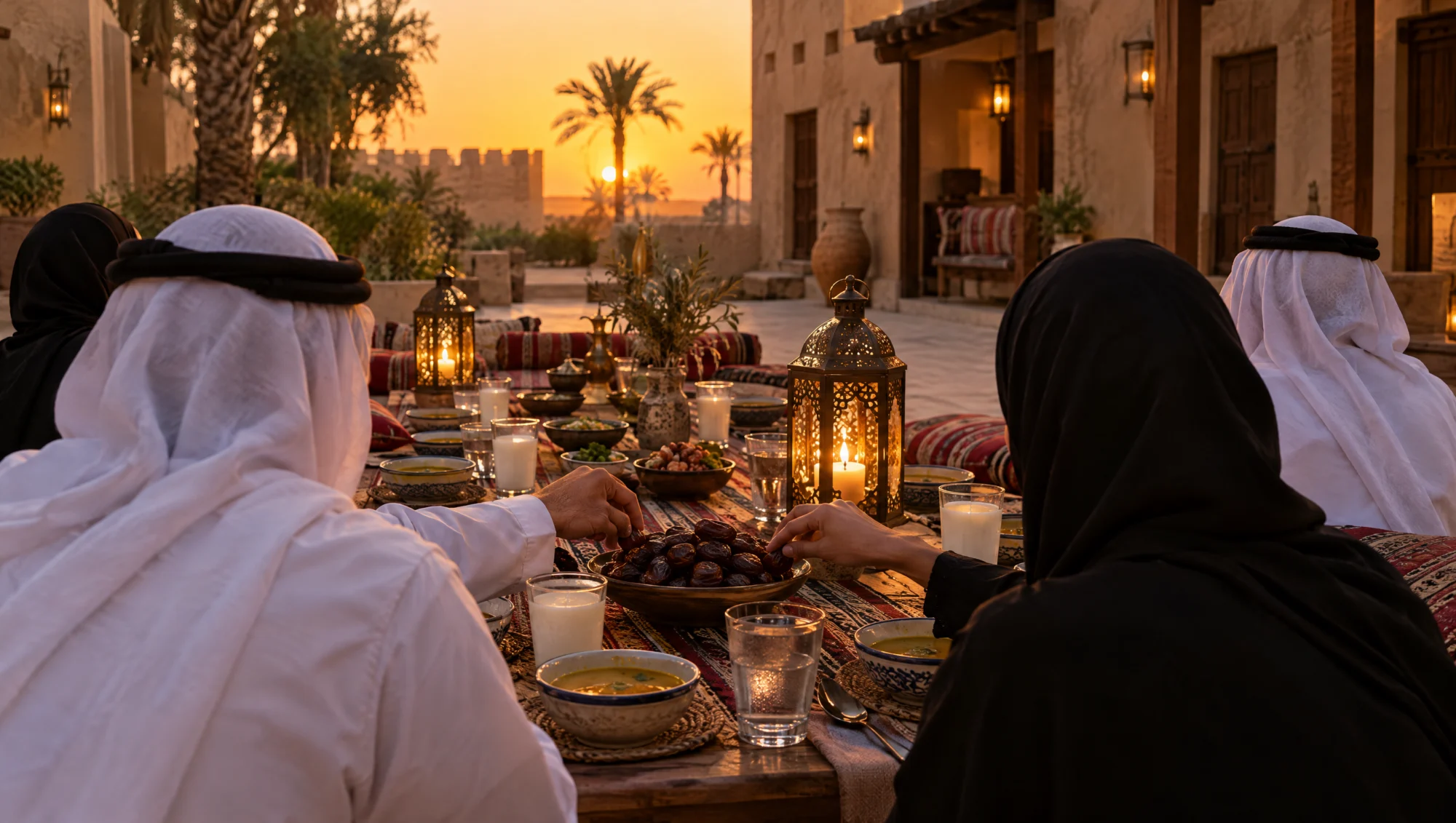
Iftar is the meal that breaks the fast at sunset, right at the Maghrib call to prayer. Traditionally people start with dates and water or laban (buttermilk), pray, and then eat a larger meal. Emirati favourites include harees, thareed and luqaimat. If you want to try making them at home, see our recipes for Al Harees and luqaimat.
In some places the end of the fast is still marked by the Ramadan cannon (Midfa Al Iftar), a tradition carried out by the authorities each evening. Watching it is a lovely way to feel the moment the whole city exhales.
Suhoor: the meal before dawn
Suhoor is the meal eaten before dawn, before the fast begins at Fajr. Many families eat at home, but hotels and restaurants also run late-night suhoor menus that go on into the early hours. Going out for suhoor with friends is a very Ramadan thing to do in the UAE.
What are Ramadan tents?
Ramadan tents come in two kinds. The first are charitable iftar tents, set up near mosques and in public places by organisations such as the Emirates Red Crescent, where anyone fasting can eat for free. The official portal notes that free iftar meals are common at mosques, malls and public spaces. These are mainly for people who are fasting, often workers far from their families, so if you are not fasting, it is kinder to leave the space for them.
The second kind are hotel and restaurant Ramadan tents or majlis-style lounges, which serve paid iftar buffets and suhoor menus in the evening. These are open to everyone, and booking ahead is wise, especially on weekends. Prices and formats change every year, so check with the venue directly.
Can you eat and drink in public during Ramadan in the UAE?
Yes, in practice, but do it discreetly. The UAE government portal does not describe a general ban on eating in public, and it confirms that restaurants, amusement parks and tourist sites stay open during the day. Food courts in malls often have designated areas, and some restaurants put up screens or curtains during fasting hours. Supermarkets operate as normal.
What is still expected is respect. The UK government travel advice points out that eating, drinking, smoking or chewing gum in public in daytime, including in your car, can cause offence, as can loud music, dancing and swearing. A good rule of thumb:
- Eat and drink inside restaurants, cafés, your hotel, your office kitchen or at home.
- Avoid snacking or drinking while walking through a mall, on the street or on the Metro.
- Carry water for children and for health reasons; nobody expects a child or someone unwell to go thirsty. Just be discreet.
- Do not smoke in public during fasting hours.
Rules and enforcement can vary between emirates and venues, so follow signs and staff instructions where you are.
What changes for working hours during Ramadan?
Under UAE labour rules, the private sector working day is shortened by two hours during Ramadan, for both Muslim and non-Muslim employees, without any cut to regular pay. The official portal states this clearly, and the Ministry of Human Resources and Emiratisation (MOHRE) confirms the details each year. In 2026, MOHRE also allowed companies to offer flexible or remote arrangements within the reduced hours, depending on the job, and hours worked beyond the reduced day may count as overtime.
For federal government employees in 2026, working hours were Monday to Thursday 9am to 2:30pm and Friday 9am to noon, according to Khaleej Times reporting of the official announcement. The 2027 timetable will be announced closer to Ramadan. If you are owed extra pay for longer days, our overtime calculator can help you estimate it.
How do opening hours change during Ramadan?
Expect a quieter daytime and a busier night. Here is what usually happens:
- Malls often open later in the morning and stay open until late at night, sometimes past midnight.
- Restaurants may reduce daytime hours, then fully reopen at iftar. Many stay open late for suhoor.
- Supermarkets and grocery shops generally keep normal hours.
- Government offices work shorter days, so plan paperwork for the morning.
- Paid parking hours change. The official portal advises checking meters or your emirate’s transport authority.
- Taxis can be hard to find just before sunset, when drivers break their fast. Book ahead if you need a ride at iftar time.
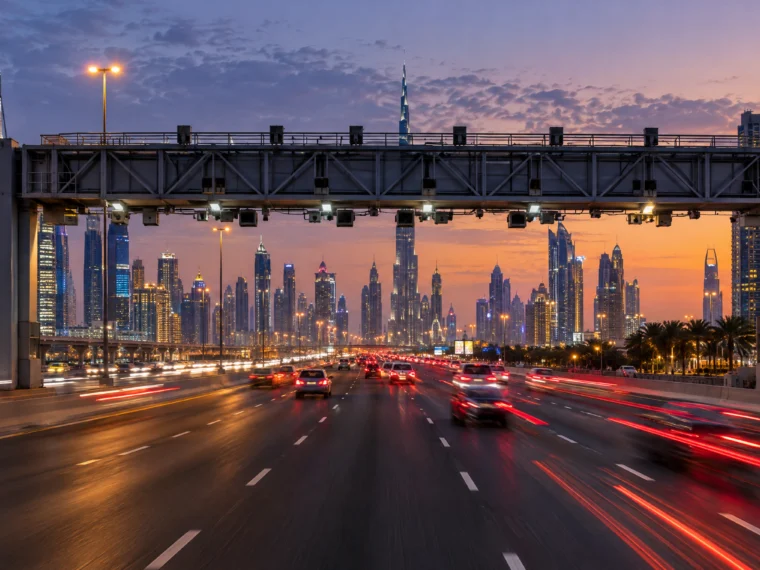
Roads are busiest in the hour before iftar as everyone rushes home, so drive patiently and avoid that window if you can.
What should non-Muslims know about Ramadan etiquette?
You do not have to fast, change your religion or join prayers. Most people who are fasting are warm and welcoming, and many enjoy sharing iftar with friends of other faiths. A few small habits go a long way:
- Dress a little more modestly in malls and public places. Covering shoulders and knees is a sensible standard. Our guide to dos and don’ts in Dubai has more detail.
- Keep the volume down. Avoid loud music in public and in your car, and avoid swearing.
- Be patient. People who are fasting may be tired late in the afternoon. Schedule demanding meetings for the morning and avoid booking calls close to iftar.
- Accept invitations. If a colleague or neighbour invites you to iftar, it is a real compliment. Bringing dates or a box of sweets is a kind gesture.
- Give through official channels. Charity is a big part of Ramadan, but donations must go through licensed organisations, and begging is illegal in the UAE.
Ramadan is also a good time to visit mosques. The Sheikh Zayed Grand Mosque in Abu Dhabi runs Ramadan programmes, and the Sheikh Mohammed bin Rashid Al Maktoum Centre for Cultural Understanding in Dubai hosts cultural iftars where you can ask questions in a relaxed setting.
What do you say to someone during Ramadan?
The two most common greetings are “Ramadan Kareem” (generous Ramadan) and “Ramadan Mubarak” (blessed Ramadan). Either one is polite, and people will be pleased you made the effort. A common reply to “Ramadan Kareem” is “Allahu akram” (God is more generous).
At Eid, the greeting is “Eid Mubarak” (blessed Eid). You can find pronunciation help and other everyday phrases in our Arabic phrasebook.
What happens at Eid al-Fitr?
Eid al-Fitr, the “festival of breaking the fast”, begins on the first day of Shawwal, the month after Ramadan. The morning starts with special Eid prayers, followed by family visits, new clothes, gifts for children (often cash called eidiya) and big meals. Before the Eid prayer, Muslims pay Zakat al-Fitr, a small charity so that everyone can celebrate.
The official UAE public holiday list sets the Eid al-Fitr holiday from 1 to 3 Shawwal, and if Ramadan lasts 30 days, day 30 is also an official holiday. Eid holidays are not moved to another day, even if they fall on a weekend. In 2026, that meant a four-day break for most workers. For an overview of the year’s other days off, see our guide to important UAE holidays.
For visitors, Eid is a festive time to be in the country, with fireworks, events and family crowds in malls and parks. It is also one of the busiest travel periods, so book hotels and flights early.
Is Ramadan a good time to visit the UAE?
It can be a very good time, as long as you know what to expect. You get quieter days at attractions, mild February weather in 2027, special iftar and suhoor experiences, and a real sense of community in the evenings. The trade-offs are shorter daytime hours at some restaurants, a calmer nightlife scene and a need to be a little more mindful in public. To weigh it against other seasons, read our guide to the best time to visit the UAE.
Quick checklist for Ramadan in the UAE
- Check the official start date announcement a day or two before 8 February 2027.
- Pack modest outfits that cover shoulders and knees for malls and public places.
- Eat and drink indoors or out of public view during daylight hours.
- Book iftar and suhoor venues ahead, especially on weekends.
- Avoid driving in the hour before sunset if you can.
- Learn “Ramadan Kareem” and “Eid Mubarak”.
- Book Eid travel early.
Last checked: October 2026. Rules and fees in the UAE change; confirm on the official pages above before you rely on them.
Frequently asked questions
When does Ramadan 2027 start in the UAE?
Ramadan 2027 is expected to start on or around Monday 8 February 2027, based on astronomical forecasts. The official date is confirmed only after the UAE moon-sighting committee announces it.
Can tourists eat in public during Ramadan in the UAE?
Restaurants, cafés and attractions stay open during the day, and the official portal does not describe a general ban. Still, it is respectful to eat, drink and smoke indoors or out of public view during fasting hours.
Do non-Muslims have to fast during Ramadan in the UAE?
No. Non-Muslims are not required to fast. You are only asked to be considerate, dress modestly in public and keep noise down.
How long is the Eid al-Fitr holiday in the UAE?
The official holiday runs from 1 to 3 Shawwal, and if Ramadan lasts 30 days, day 30 is also a holiday. Exact Gregorian dates are announced each year after the moon sighting.
Sources
- UAE Government portal: Ramadan
- UAE Government portal: Public holidays
- Ministry of Human Resources and Emiratisation (MOHRE)
- The National: Ramadan 2027 expected dates
- Gulf News: Emirates Astronomical Society forecast for Ramadan 2027
- Khaleej Times: Ramadan 2026 working hours
- UK FCDO travel advice: United Arab Emirates
- Sheikh Zayed Grand Mosque Centre: The month of Ramadan
Spotted something out of date? Tell us and we will fix it.